Why Do Dogs Rub Their Bum on The Ground?
Scooting is when a dog drags his bottom along the surface in a seated position. The dog may do this indoors on the floor / carpet or outside on the ground.
Dog scooting is often combined with excessive licking and chewing beneath the tail. These activities can damage the delicate tissue around the dog’s anus, so you should always take dog scooting seriously and seek Veterinary advise as soon as possible.

Anal Gland Problems
Dog scooting is one of the most common symptoms of blocked anal glands in dogs. The blocked / swollen anal glands are causing discomfort which your dog is trying to relive by rubbing his bottom on the ground. Other anal gland issues in dogs include anal gland infection and in the more severe cases, ruptured anal gland.
Parasites
Internal parasites (especially tapeworm) are one of the most common reasons for dog scooting. If you see something that looks like small grains of rice in your dog’s stools or around his bed, you may need to have your dog treated for parasites.
Allergy
Itching and skin problems are one of the main symptoms of food allergy in dogs. Dog that is scooting more frequently shortly after eating and defecating, may be having some food allergies.
Urinary Tract Infection (UTI)
UTI is less common cause of dog scooting but it should be considered if other reasons have been ruled out. Therefore, if your dog’s scooting is accompanied by frequent urinating and excessive thirst, then it is worth checking for urinary tract infection. UTI related dog scooting is more common for female than male dogs.
Dirty Bottom
Dog may use scooting to clean their bottom after defecation. This is then likely to be an isolated incident, i.e. not happening every time your dog poops.
Skin Irritation
Sometimes dogs may suffer from general skin irritation around the bottom area and then may use scooting to scratch themselves. However, if the scooting lasts, then you should have the dog checked by a Vet as it could be indication of something more sinister, like fleas or, in the case of females, vaginal infection.
Neoplasia
Dog scooting could be a sign of an abnormal growth of cells (neoplasia). Neoplasm can be benign (not cancer) or malignant (cancer). Which is one more reason to always take dog scooting seriously.
The first thing you should do when you see your dog scooting is to lift your dog’s tail and see if you can see anything that may be causing this behaviour, like something stuck or a scratch. If you don’t see anything that you can quickly address yourself, then you should take your dog to the Vet to find out the exact cause for his behaviour.
The Vet will most likely start by checking your dog’s anal glands and if swollen or blocked, he will perform manual anal gland expression which normally provides immediate relief and stops the dog scooting. If the condition is persistent or severe, then your Vet may prescribe anti-inflammatory medication to prevent swelling. While dog anal gland infection will require a course of antibiotics.
If the anal glands are not affected, then your Vet will look for other reasons as previously described and treat your dog accordingly.
Dog scooting is unpleasant condition for your dog. You therefore want to do what you can to prevent recurrence. This can include parasite prevention, good hygiene, regular health checks, and last but not least, high quality diet.
Good balanced diet does wonder for your dog’s health and can reduce the risk of stomach upsets, allergies, and skin irritation. It should also help to keep your dog’s stools firm and healthy, which is required for dogs to properly empty their anal glands.
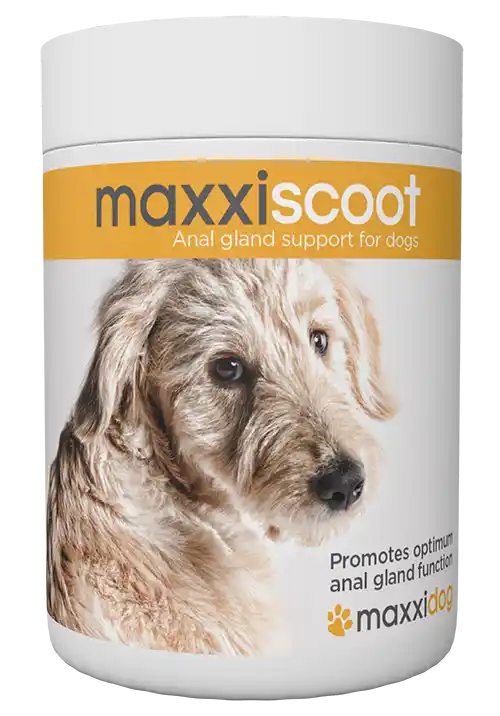
Still, sometimes more support is needed. Good anal gland supplement can support your dog’s anal gland health and help to reduce the risk of recurrent anal gland problems. Dog anal gland supplements should contain enough of high-quality fiber, as well as other natural ingredients that help bulk and firm the stools, ease defecation, promote digestion and support healthy immune responses.