The state of your dog’s gums can tell you a lot about your dog’s health. Pale gums in dogs can be a sign of a serious health condition that requires urgent medical attention, while dry, tacky, or off-colour gums can be a sign of dehydrated dog gums.
It is therefore important to check your dog’s gums regularly and look for any signs of gum issues. But first you need to know how normal healthy dog gums should look and feel like. As importantly, you need to know how your dog’s healthy gums look like because not all dog gums look the same.
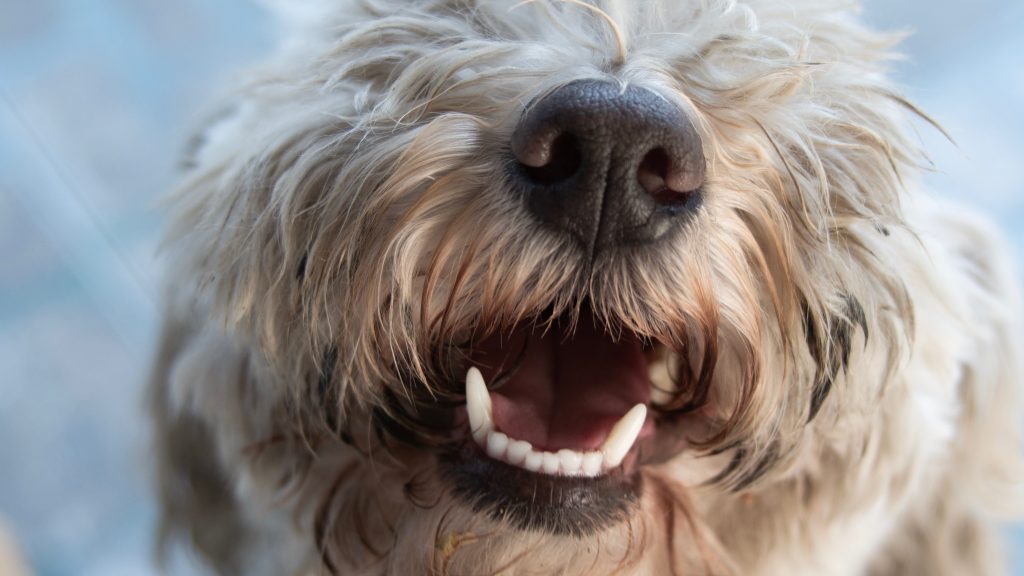
Normal healthy dog gums are pink coloured (salmon or light bubble gum pink) and they should be moist and smooth when touched.
It is important to check your dog’s gums regularly, so you know your dog’s “gum-health baseline” as that will help you to spot any gum issues early on. As with any health problems, the sooner you notice them, the easier they are to treat.

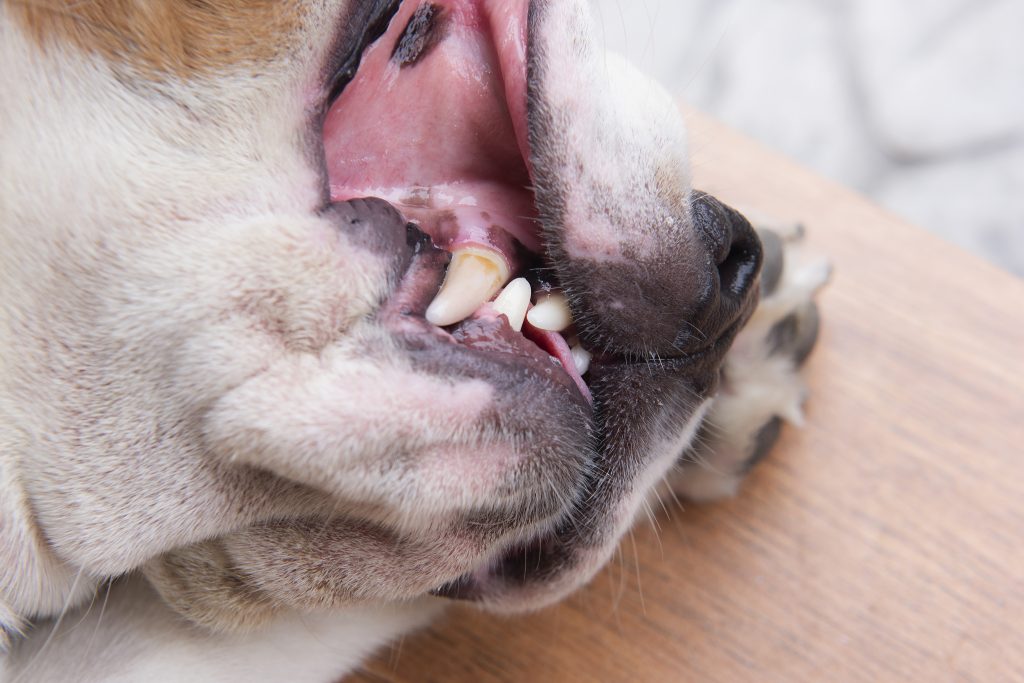
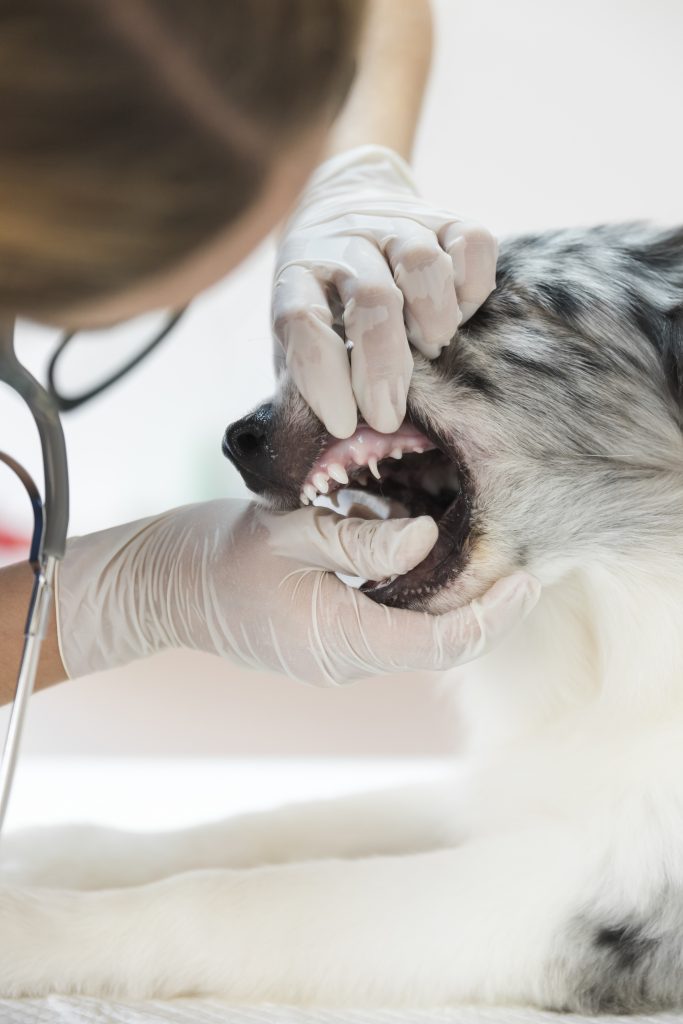
To check your dog’s gums, carefully lift your dog’s upper lip and check the gum above the canine tooth. First check the colour, is it the normal pink colour for your dog? Then press gently on the gum with your finger for couple of seconds.
Once you let your finger go, you notice the gum is white or pale pink, but it should quickly return to your dog’s normal healthy pink colour. If it doesn’t, then you need to investigate further.
The first step is to try to eliminate some obvious explanations, like dehydration.
Dry, off-colour gums can be a sign of dehydration so if you suspect your dog may be dehydrated look for other signs of dehydration, like loss of skin elasticity, dry nose, loss of appetite, and excessive panting. Severe dehydration would show even more obvious signs, like weak pulse, loss of balance, dark urine, reduced energy levels and slow responses.
Provider fresh water for your dog and encourage him to drink it slowly (drinking it too quickly can cause vomiting, resulting in further loss of fluid). If you cannot get your dog to drink, or if you suspect he is suffering from severe dehydration, then you need to take him immediately to the Vet.
If you can eliminate dehydration as the cause for your dog’s abnormal gum colour, then you need to look for other explanations and they most likely will require you to liaise with your Vet.
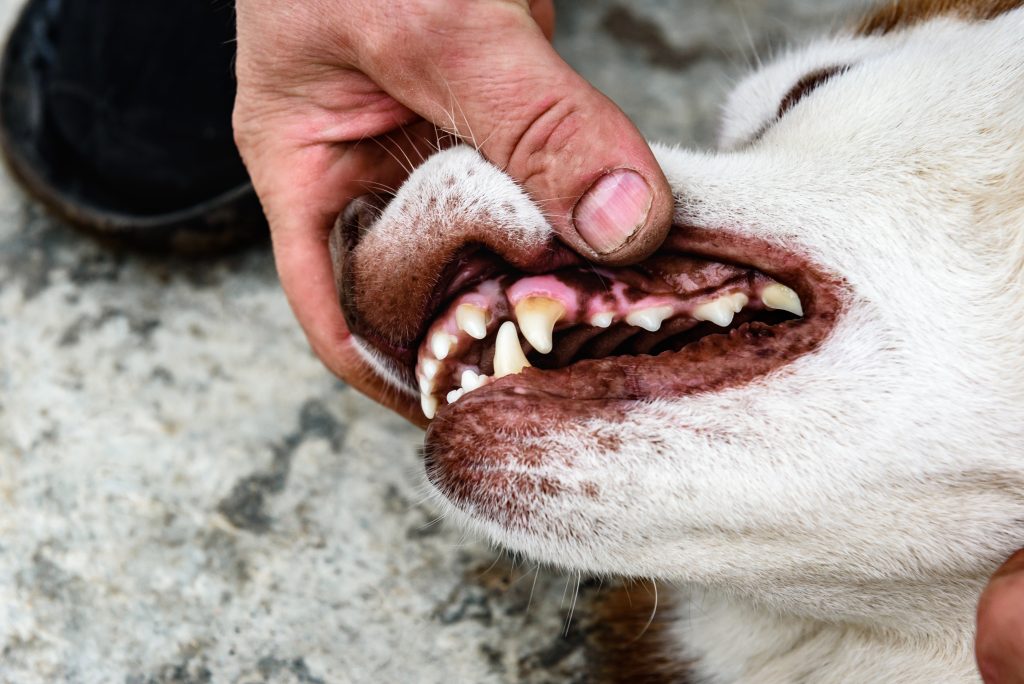
Bright Red Gums in Dogs
Red gums in dogs can be a sign of your dog overheating. Bright red gums in dogs can also be a sign of your dog being septic (infection causing low blood pressure). Red gums can also be a sign of gum inflammation or gingivitis in dogs.
All of those are health conditions that may be / become serious. Red gums in dogs is therefore always a good reason to take your pet to the Vet for further examination.
Yellow Gums in Dogs
Yellow canine gums indicate issues with the red blood cells or liver damage. So if your dogs gums are yellow coloured, you need to take your dog to the Vet.
Brown Gums in Dogs
Brown canine gums suggest lack of oxygen and most commonly result of paracetamol toxicity so brown gums in dogs require immediate Vet attention.
Bruised gums in dogs or red spots in the gums may be a sign of a blood clotting disorder which is a serious condition that requires immediate Vet attention.
Pale gums in dogs (white or very light pink) are usually a sign of some serious health issue and require immediate Vet attention.
Most commonly, pale gums in dogs means the dog has anemia (not enough healthy red blood cells) or low red blood cell count. Fortunately, anemia and low blood cell count can usually be treated but you will need your Vet’s help in doing so.
Pale gums in dogs may also be a sign of internal bleeding, autoimmune disease, blood-clotting disorders, or heart disease. All serious health conditions that should be require immediate Vet attention (emergency Vet visit).